Showing posts with label imperial stout. Show all posts

23/12/2013

Paint It Black

Instead of a specific seasonal this year Eight degrees have launched a limited edition trilogy of dark beers - Back to Black. I've picked them up from Drinkstore and am unselfishly drinking them to let you know whether they're worth getting!


Going up in increasing ABV order then we first come to Aztec stout, 5.5%; so called because it has cocoa, cinammon, chipotle chili and vanilla.dark cola brown with lacing latte head. Roasted barley with a fruity chili note, touch of marmitey Autolysed yeast. More fruity notes on swirling. Medium bodied, low carbonation, fairly sweet fruitiness, touch of chili heat, dry dark chocolate malt. Missing the vanilla and cinnamon in taste but an enjoyable winter warmer.


Next up was Zeus Black IPA at 7%. Its fantastic, not just the best BIPA I've tried in Ireland but one of the best for these islands combined.Rich citrus and guava with slight chocolate undercurrent. Cola with a lacing of beige head. Full bodied, tingling carbonation, tangerine, pithy bitterness, long bitter finish. Spot on BIPA. Highly recommended a steal at 2.80!

Rounding of the trilogy we have Imperial Russian Stout at 9%.  Pouring resplendent with fluffy tan head in the glass and an inviting aroma of rich chocolate cake. There's also leather and a touch of citrus peel. Unctuous mouth feel, thick bodied, gentle carbonation, rich fruitcake malt, plummy, molasses, tobacco, boozy hit, dry. Will probably age well, a beer this big needs some more complexity...Brett would work well here.


Whilst we're on dark beers I may as well tell you about Porterhouse's new release: The Devil's Half Acre - a monster of a beer at 13.5%! Pours hazy dark cola coloured with a frothy tan head. Initial fresh citrus aroma followed by treacle toffee, rich boozy whisky, vanilla woody notes, marzipan. Full bodied, medium carbonation, sweet, powerfully bitter, big whisky kick, bourbon biscuits, dry roast barley notes. Long dry barley finish. Its a big bruiser of a beer but really well made, with the whisky deftly controlled. This should still be available in porterhouse bars for 4 this week and in a few off licences if you're lucky.


Tune in next week for some beers from the lighter side of the spectrum!

16/12/2013

Wiping those Blues away

Perhaps one of the beers I've heard  the most about but not had the chance to try is Oskar Blues Dales Pale Ale. So when a range of Oskar Blues wares (in canned form no less) appeared on the Brewdog store I filled up my basket and here are the results:

 Mama's little yella pils is your typical pilsener at 5.3% Hazy pale golden blonde. White lacing Minimal dusty grain nose, fairly sweet, medium carbonation, dry grain and a touch of herbal hops. Ok but probably better on draught.

The buzz around Deviant Dales (at 6.5% a bit high ABV wise for a pale ale) is certainly justifiable in my mind. Hazy burnished gold with fluffy off white head and rich piney nose. Sweet malts balanced by fresh floral hops and a fairly bitter finish. Medium body and gentle carbonation. Really fresh and immediate hop impact.


Deviant Dales (the 8% IPA amped up version of the aforementioned) is equally good.Amber with cream tinted head with dank herbal nettle aroma. Medium carbonation, full bodied, sweet at first followed by pithy citrus bitterness, juicy orange and lime peel with dry finish.

Collaboration with Sun King The Deuce is a 7% brown Ale. Murky chestnut with beige head. Piney hops with some simcoe orange. Medium carbonation and body, fairly sweet, orange sherbet, pithy hops, dry slightly chalky finish.

Gubna Imperial IPA wasn't quite as enjoyable however. Clear burnished gold with lacing of white head. Digestive malts light tangerine and a suggestion of tcp on the nose. Full bodied with light carbonation. Sweet, higher alcohols, slightly acrid, highly pithy. Not as hoppy as expected but 6 months old so may have dulled somewhat.

G'Knight is an Imperial Red IPA at a whopping 8.7%.
Attractive ruby brown with tan lacing. Rich pine needles, forest floor and sweet toffee. Medium carbonation, dry rasping bitterness well balanced by sticky toffee malt and a slightly astringent warming finish. It was enjoyable enough but perhaps overcarbonated.

Ten Fidy is the Imperial Stout weighing in at 10.5% with 98 IBUS.
dark brown with muddy tan frothy head which collapses to a lacing. Rich savoury dark malts, slight Marmite and coffee. Full bodied, rich savoury malt, slight tobacco, sweet caramel, dry ashen finish. Slight alcohol as more drunk, dry slightly meaty barley, long malt led finish.
Old Chub 8%
Dark ruby chestnut with tan lacing rich sweet malt, caramel, ripe fruit,sweet, rich malt,touch of milky coffee, prunes,cola, soft carbonation. Fairly rich. As usual, I'm not a fan of the malt led beers; so I don't like this "Scotch ale"


I also tried obliterator doppelbock 10.5% on keg at brewdog Bristol. It again confirms my suspicion that doppelbocks are not for me; with the majority of my third going to a member of staff. Dark brown, very sweet, minimal aroma, malt led. Caramel and milk chocolate. 

Oskar Blues also came over and collaborated with Brewdog to produce Shipwrecker circus, a 10.5% barley wine. Dark ruby chestnut with fluffy beige head. Hop driven resinous aroma with Orange pith. Full bodied, pithy citrus assault, sweet caramel, some higher alcohol notes then a long orange bitter finish. Moderate carbonation Like someone tipped a bottle of orange bitters into caramel sauce. I quite enjoyed it but is very heavy going and perhaps one for sharing. £5.99 is quite reasonable for  a strong beer too, though does equate to over £10.31 a pint if you like to get bang for your buck, this is not it.

So were they worth the dosh? Certainly the deviant dales and dales pale ale were brilliantly fresh, no doubt helped by being canned and the ten fiddy is a decent enough imperial stout, but we now have enough good beers in the UK that we don't have to look abroad for something decent to drink. With my shareholder discount these weren't too extortionate but cost effective, I'm not sure...


14/12/2012

Revelation Cat

PhotobucketIts very unusual that I get a message out of nowhere offering me beer for free. Its even less frequent (read: this is the first time) that the brewer hasn't specifically asked for publicity/ a review in return rather just my opinion shared with him in whatever manner I saw fit. I actually really enjoyed the beers (not a function of them being free); so have decided to let readers of this blog know about them so that they can get hold of them for themselves.
    
Revelation Cat started off as a gypsy brewer along the lines of Mikkeller, though primarily based in Italy. Brewer Alex is also the driving force behind Rome's Brasserie 4:20 one of the premier beer venues in that country. Recently they have been brewing batches of beer in Kent with Eddy Gadd, which has proved successful enough for Alex to invest in brew kit of his own next door. He's sharing the mash tun and kettle but everything post boil including fermentation is done on Revelation Cat's premises. In effect that means we have another new brewer in the UK!

Photobucket

I had a pleasant surprise when the beer arrived, not only were there 7 different beers to try I had received multiple bottles of each! I made my usual review notes on rate beer and from the scores that emerged decided that it was well worth telling you about the beers.

PhotobucketTake My AdWeisse is a US-hopped wheat ale with a gentle satsuma pith nose and part of the "session series". At 4.5% its at the higher end of the scale, but I could certainly happily sink a few pints of this. It becomes more resinous as it warms but retains the thick creamy mouth-feel and wheat spiciness throughout. I found myself craving some weisses banana and clove esters though and would perhaps still opt for a traditional weisse or hoppy pale ale over this. I can certainly see a lot of space in the market for this though.


Photobucket
I wasn't quite so taken with the dry hop Thriller. A hazy pale amber ale with apricot and lemon on the nose. The carbonation and mouthfeel are about right to make this sessionable, but the balance is skewed too much towards the hops leaving a bit too much pithy bitterness and a chalky finish to be truly enjoyable. 

PhotobucketGreen-hopped F.R.E.S.H is all about the aroma which is at once soporific and enlivening. Rich resinous hops with underlying ginger, toffee and bergamot. In the mouth its pretty sweet, sticky marmalade and carrot juice but its a pleasing beer, all the more so because its made using indigenous UK and European varieties. Proof that the flavour is already there if the hops are used in the right quantities.
Photobucket
HopAddendum is a proper pale West-Coast IPA in the vein of Stone and Brewdog. Certainly no caramalt here! Complex and intriguing nose of red apple, kiwi and strawberries. The apples arrive first to the tongue, followed by satsuma, resin, pith, bitter hops, long fruity finish. Despite its 6% ABV I'd certainly be happy to stick with this one beer all night and certainly prefer it to Punk IPA (previously a firm favourite).

PhotobucketFollowing right in behind is California Moonset, a double IPA at 7% ABV. This one pours hazy dark amber with fluffy white head. Pithy citrus with smoother grape flavours beneath. Centennial and Nelson Sauvin perhaps? The bitterness is up front followed by jammy blackcurrant and tangerine. Long dry moreish finish. No tacky crystal here either, another sessionable big hitter. Zak would probably describe it as ruinously drinkable.

PhotobucketThe penultimate beer is into silly territory at 13%. I don't know where all that alcohol was hiding though tasting closer to 9%. Hop Animal is a "double double IPA" (think Brewdog Anarchist/ Alchemist for comparison). It reminds me of an US-style barley wine like Sierra Nevada Bigfoot. The malt is fairly robust but the heavy hitting hops are lurking in behind ready to assault your palate. Dark ruby with white lacing with fruity malt loaf and brandy nose with supporting Seville marmalade. Concentrated citrus fruit, tongue tingling mouth watering pithiness with robust toffee underscore. Long citrus refrain. Masterful.

PhotobucketAnd now for something completely different. Black Knight is very sparse in details from the label, but I can tell from the 14% ABV its going to be a monster. Turns out its an imperial stout, and not barrel aged which means all of that alcohol got there by fermentation. Its pretty heavy going and warming, 500ml is perhaps too big a bottle but I had people to share it with. Dark chocolate, booze soaked raisins, tobacco and molasses on the nose. Pours viscous black with sizeable cola head that becomes a lacing. Starts off sweet and finishes very dry with some woody tannins, coal smoke, a touch of caramel. A complex and evolving beast.It could perhaps afford to be a few percentage points lower in the alcohol stakes, and this would put it on an equal footing with such UK masters as Magic Rock Bearded Lady and Kernel Imperial Brown Stout.

From this showcase I'm certainly excited to find out what else Alex has up his sleeves (UK Brasserie 4:20 anyone?!) and certainly hope to come across some of these in the pub. According to Alex they've had to expand capacity already; so they should certainly be appearing in UK outlets any time now!
Twitter: @RevelationCat

27/10/2012

More barrel aged beers

Clicking the "new post" button after the best part of two months away from my blog is not done without some trepidation. Will the words come easily or will it be a struggle? Perhaps more nagging is the feeling that perhaps no one will read it after so long away. 

It wasn't particularly a planned absence, but became prolonged due to a number of real life changes which seem to be very much for the better. I now have a new job, new place of abode (still in Northern Ireland) and my fiancée has moved in with me. I've an impending wedding to plan for, not to mention the cheese & beer e-book (book?) I'm writing.

Anyhoo, enough introspection for one post and on to the subject that you're all here for...beer. And not just any beer but the barrel-aged kind. Yes, I know a lot of people will have already decided the beer is not for them, but bear with me and I'll attempt to change your mind.

The beer that has been aged in this case is an imperial stout. These tend to be the best for barrel-aging as the complex malt base is often robust enough to withstand additional spirit andwood flavours. The ABV can't harm either, helping to coddle that increased booze hit some people are all too familiar with as a side-effect of barrel ageing.

These beers also contain additional flavour components in the form of coffee beans and vanilla which marry well with the flavours of the spirits in question; namely an Islay and a highland whisky: 27 y/o Caol Ila and 14 y/o Clynelish to be precise.

I was a big fan of the base beer: "Pours garnet-tinged viscous black with a foamy mocha head. light chocolate, lemon a rich fruity coffee on the nose. Thick bodied, smooth, rich carbonation, smokey coffee first, then fruit, rich coffee, dry coffee on the tip of the tongue. Chocolate, a touch of orange peel not much sign of the vanilla but a fantastic stout. Can feel the coffee buzz a few sips in." How did the barrel aging cause the beers to evolve? I opened my bottles to share with my (future) father in law to find out.


The Clynelish barrel had imparted a sourness to the beer in both taste and aroma but it had also gained underlying honey, seaweed and soap. There was also some cola flavours and malty sweetness where previously there had been none. The finish was quite warming in alcohol but not at all harsh.

Caol Ila brought some meaty iodine and sticky tar to the table. Light smoke was the only contribution to the taste from this bully of a whisky, with a gentle caress of alcohol integrating much more smoothly than in its younger sibling.

Although both well-crafted beers with differing but related flavour profiles; I think I actually enjoyed the base beer more. Yes it was a sweeter after dinner sipper but it was one which evolved as the drink progressed. The whisky aged beers pulled out all the stops at the start but became a touch samey by the finish. Perhaps more people to share them with would have helped. Still, an example of barrel aging done well.

Big Thanks to Andy @Tabamatu who gifted me the original Kopikat at the beer blogger's conference earlier this year and to Dan @dandanglover for hand delivering the barrel aged variants to me during my flying visit to Edinburgh. If you're ever in town check out the shop he works at Great Grog for a decent selection of UK and overseas beers.

13/07/2012

Tokyoing

I enjoy whisky barrel-aged beers (there, I said it!); so when Brewdog announced the release of Tokyo which had been aged in respectively a Highland and Lowland cask ("Tokyo Rising Sun") my interests were piqued and in the interests of science *ahem* purchased them* to report back.

I also decided to compare the beers to a representative whisky from each of the regions to see if I could discern any of the flavours transferred. I'd also have liked to compare to original Tokyo, but this has long since sold out and fresh (now 18%) Tokyo* will have to suffice.

Lowland up first then (only one cask of this). Pours unctuous pitch black with a temporary cola head and steady stream of effervescence. Caramel, molasses, tobacco, chocolate, cocoa, whiff of peat. Thick in the mouth, some definite tcp and smoke, sweet malt, apple cigars, cold hearth. Sweet in the finish, almost distracting from the stout richness.

Medium golden Glenkinchie in comparison smells very one-dimensional and quite grainy. Taste wise there's grass, beechwood and a fairly fiery finish. I'm not sure this was the cask used, though there's only a few lowland distilleries so the probability is quite high!


Highland Tokyo Rising Sun pours oily black with a fluffy cola head that soon collapses to a lacing. Oily legs and big aroma of peat bogs, sour cherries, campfires and mead. Slightly more carbonation in the mouth and a lot more charred wood and cranberry than the lowland. A touch of cola, less residual sweetness soon leaves the tongue but long finish around the mouth and down fruit. Warming but not noticably alcoholic. I’d say people may find this a bit more of a struggle to drink.


Dalwhinnie** this time and with a mouth full of smoky beer the woodsmoke notes overpower the honey nose i usually get from this. It almost smells like new make spirit. Its extremely sweet in the mouth with pineapple up front, vanilla and some applewood smoke. Very fiery again, something the beer seems capable of accentuating in the whisky.


To finish things off nicely I've a bottle of Tokyo*. This 18% beast is a souped up version of those aged above but should still be an interesting comparison. Last time I tried it however I wasn't too impressed, it was a tad oxidised with an unpleasant acetic nose. Dark Brown with fluffy tan head, cranberries and chocolate malt on the nose but still a touch acetic. Thick body, rich, tart cranberry, chocolate, coffee, caramel, vanilla. This is much better than the previous bottle! Long sweet and boozy finish with a touch of roast barley and malt astringency. Jasmine comes in late with more malt sweetness.


I preferred the Lowland aged Tokyo to the highland aged one, by some way, but both are good beers in their own right and up there with the best Paradox brews. If someone offers you to share a bottle, I'd accept! But in terms of buying for yourself you're better of with getting the Tokyo* and drinking a glass of whisky alongside, its just not worth £25.

*Although aided by my 20% shareholder discount, they're still among the most expensive beers I've purchased. I can understand why though, the base beer wasn't exactly cheap with cranberries and jasmine added, then there's the purchase of the whisky casks, 3-4 years storage time, limited label run and of course beer geek tax.

**Yes, I am aware of the irony of picking two Diageo owned brands of whisky. For those of you who aren't see #DiageoGate.


08/05/2012

Wood Aging

I started writing this post ages ago, and since then there have been a number of posts on wood-aging.

A trend that has been noticed recently is barrel ageing of beers. Usually stouts though any beer which has high enough alcohol content for ageing has probably been stuck in a barrel at some point. 

Some beers are aged in "virgin" casks; i.e., they've not been used previously whereas others may come from the whisk(e)y/rum/brandy/(insert spirit here) industries.

I seem to have built up a sizeable stash of these so thought I'd put my thoughts down here. Unlike some people I enjoy barrel aged beers. It can be overdone resulting in an alcoholic mess or oaky soup, but when done well it can enhance and complement the base beer's characteristics.

There are probably two well-known barrel agers in the UK and both based in Scotland. Their methodology couldn't be more different. Whilst Innis and Gunn was originally a waste product from the beer conditioning of new oak casks it gained a small following and the company was formed around it. Since then they've also released spirits barrel aged editions including the Irish Whisky stout reviewed below.
Brewdog on the other hand, have a large stash of whisky barrels from all over Scotland and showcased how their different characteristics come through in a standard (though by no means mundane) base stout. This is their Paradox range. They've also barrel aged a large number of their limited release products*. I have three of these coming up next month.

So on to the reviews. First up is a biggy: Great Divide's 17th anniversary Wood Aged DIPA. Pours dark amber, with fluffy beige head and aroma redolent of marmalade on toast with underlying vanilla pod sweetness. Well balanced wood, malt and hop notes flavour wise, alcohol hidden expertly. This is an example of how to wood age well and flys in the face of the assumption that it has to be a stout to be barrel aged.

The aforementioned Innis and Gunn pours dark ruby with vanilla and toffee apple on the nose. Quite highly carbonated with more toffee apple, sweet caramel, chocolate. Lingering sweet finish. Pretty well done.

Goose Island Bourbon County pours black as night with a lacing of beige and a continual eruption of small bubbles that burst on surfacing. Vanilla custard and caramel liqueur on the nose. Thick and rich and warming with chocolate, robust barley, through coffee, chicory and a long warming vanilla finish. Coffee comes in afterwards and rumbles on alongside oaky influences and a final whisky kiss. This is a fantastic beer.


Its becoming a more widespread practice within the UK too, with brewers such as Hardknott (with their Æther Blæc in four iterations this year), Summer Wine, Black Isle, Harviestoun^ and St Peters experimenting. Even the Mighty Fullers is involved with their Brewer's Reserve beers now approaching its fourth year.


*I recently reviewed Brewdog Bitch Please, another barrel aged beer
^With their excellent Ola Dubh range

20/03/2012

More Bottled Magic

Having tried the majority of the Magic Rock range (both in draught and bottle form) I was looking forward to trying the final two "specials" as sent to me by Dan Glover (@dandanglover), cheers!

Unpredictable
First up, the Magic 8 Ball which plenty of people have been reviewing positively. It pours very dark brown with bubbly tan head. Some citrus and pine on the aroma but fairly subdued to what I was expecting. Flavour full of mango skin and lime pith, its pretty astringent actually. A touch of chocolate in there underneath it all. I wasn't all that keen on this but can see why it appeals to others.

Dark and mysterious
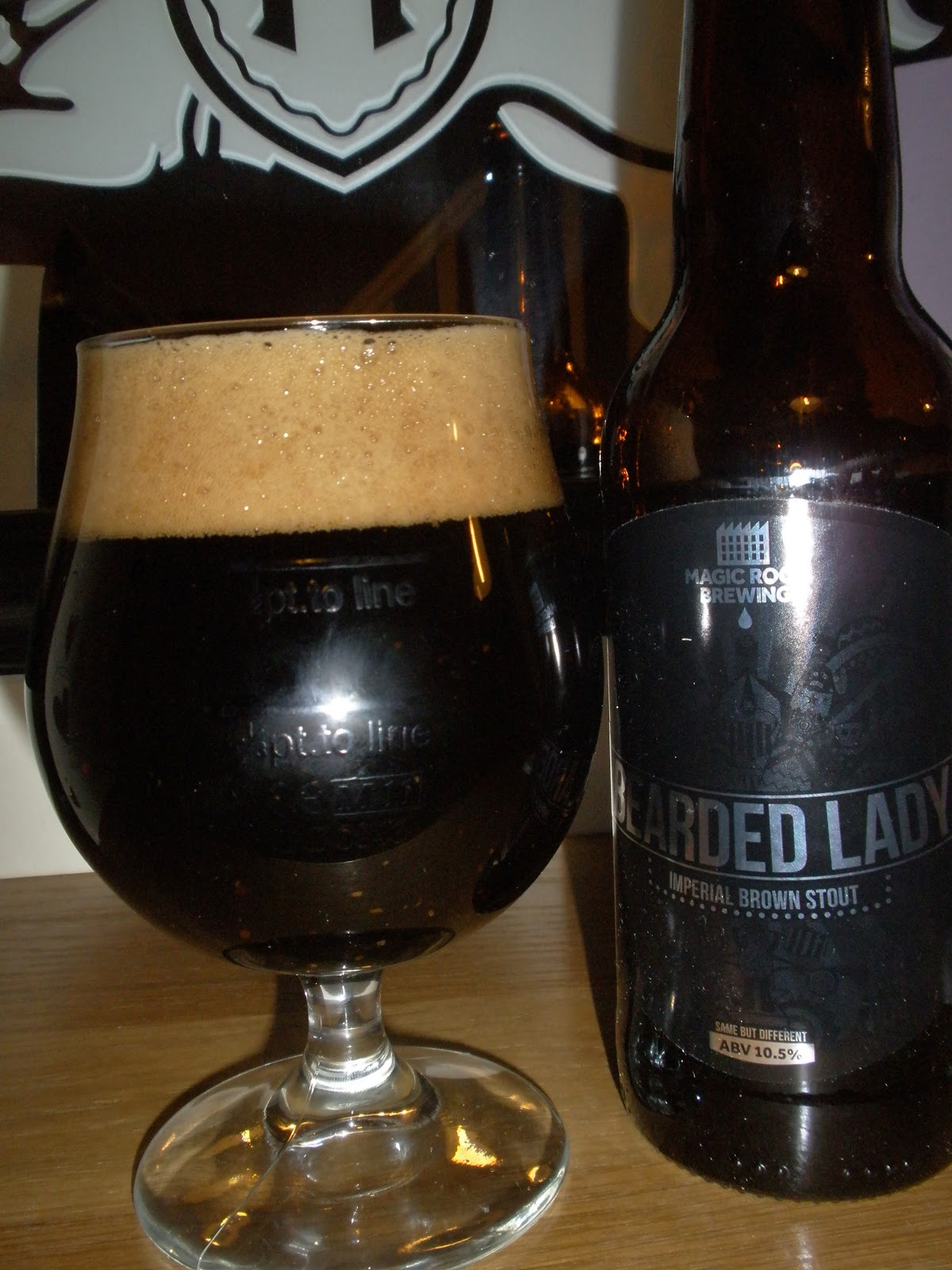
Bearded Lady is the bigger sister of Dark Arts (a firm favourite of mine in the Magic Rock range) and the family resemblance is certainly there. Chestnut tinged dark brown with creamy tan head that soon collapses to a lacing. Rich coffee and roasted barley notes on the nose. Spiky carbonation obscures initial flavours but finish is coffee, chocolate and tobacco. As it opens up there's some vanilla and caramel with watermelon flavours developing in the after-taste. Thick and warming, certainly a sipping beer but one of the better UK Imperial Stouts I've had the pleasure of supping.

I'd recommend adding both of these to your wish-list and look forward to other new releases this year. For a brewery that's still less than a year old to produce beers of this calibre is excellent work.

27/02/2012

#openit

#OpenIt is a multiparticipant Twitter organised beery event, much like #Twissup and #TheSession. The aim of it is to get you to open those beers that you've been hoarding and get writing about them. Andy over at Beer Reviews has declared this weekend to be the first such event in 2012. As with many people I have a fair few of these sat around so chose to go for the (lucky for some) target of 7 bottles to review. I did not drink all of these on the #OpenIt weekend, but they were enjoyed in the spirit of the event in any case!

Ballards Duck House
The first beer is a case in point for why its not necessarily best to hoard beer! Ballards Duck House is the annual  barley wine released by Sussex brewer Ballards. Bought from the brewery on the release date dec 2009. Its passed its BBE. This beer is a crib-sheet of off-flavours.Pours completely flat, no head whatsoever. Dark ruby. There’s balsamic vinegar and sherry on the nose. Very complex medium body reminiscent of an oud bruin. Oxidised of course with a lot of vinegar, some soggy cardboard, autolysed yeast marmite flavours, a hint of lactic acid, rounded body, quite sweet, vinous fruit. Long savoury finish with more marmite. Despite these seemingly jaring flavours the beer was quite enjoyable!

In addition to the Gales Prize Old Ales we got through at Alan's last weekend I took a number of other beers along.* Enjoying the evening too much to make copious notes I did however do some cheese pairings (how unpredictable(!)).

Law of diminishing returns?
Sparkenhoe
(http://www.norbitoncheese.co.uk
First up is Bell Ringer by Franciscan Well covered here by Reuben from Tale of Ale in much better prose than I could ever muster. To me it was very redolent of Fuller's ESB and to pair with this some sparkenhoe red Leicester was enjoyed, which really brought out those marmelade hops.

Langres
After the Gales were polished off we went onto Deschutes the Dissident. This is one complex beast of a beer. Taking inspiration from Belgian brewers this ends up as a kriek/ Flemish red hybrid. Its fruity and bretty on the nose, but without the lactic character put plenty of acetic acid. Some Langres washed rind cheese helped to take the edge off a bit.

That evening was rounded off nicely by The Lost Abbey The Angel's Share. This has all those oaky flavours in abundance but the robust malt bill is big enough to handle it. Milleens cheese is a great pairing, pulling out those fruity depths from under the vanilla. (This also went very nicely with the Gales Prize Old Ale).

And finally onto a beer style that everyone has in their cellars, the Imperial Stout. To link cleverly with the last beer reviewed, these two are also barrel aged, as brewers of big stouts are wont to do.

You knew there'd be cheese involved!
Great Divide Oak Aged Yeti is the brewery's top rated beer on ratebeer and one inside the top 50 on the nose initially a hint of dry cocoa powder giving way to rich malted milk biscuits or horlicks. On the next waft the perfumed sweetness of vanilla asserts itself, almost custard-like and a touch of alcohol. Opaque black  with bubbled tan head. Slipping down with the smoothness of milk and a gentle carbonation  at first there's molten milk chocolate followed swiftly by roast barley and acrid coffee leading to a fairly dry finish. After eating some blue cheese the vanilla is coaxed out from the bitter depths transforming the beer from espresso to mocha latte, whilst at the same time the beer embraces what was a fairly timid stilton and cajoules it to release those salty, slightly funky peniccilium roqueforti flavours finishing with some pepper. I reckon this beer would match well with a custard tart. Beware...the ABV is certainly well hidden!

Evil black depths
Mikkeller brews a lot of imperial stouts, perhaps the most well known of which being Black Hole.
Dark brown-black with thin brown tinged cream head that soon collapses to a lacing. On the nose its caramel and vanilla with a hint of beechwood and fruity coffee. Very full bodied and warming with coffee up front and booze following on quickly. Then we get biscuit and charcoal, vanilla and burnt toast. The finish is rich and boozy, lengthy, a hint of red apple. Fairly lively carbonation

*Having only just acquired the Goose Island Bourbon County it has ended up back in the cupboard with some other Impys for a future supping occasion.

17/01/2012

Some heftier Norse Offerings

@beersiveknown
Last week I reviewed some of the special beers from the NogneO range but they also have a number of the more common styles. Today I will review no less than 5 IPAs (all above 7.5% ABV!) plus a brown ale, porter and Imperial stout. (Two IIPAs formed my FABPOW post). Better get my drinking head on then! 

The first couple I tried were both disappointing. Not that there was anything wrong with them. Both the Porter and Brown Ale are competently brewed beers and drink well enough, but there's nothing stand-out about them. I can get better examples of each for half the price I paid in any number of off-licences in the UK. 
For the Norwegian market they showcase the respective styles, but its not a beer that would find much favour in the home of these styles.


The Pale Ale was bottled exactly 6-months ago and the hops have already faded leaving us with a pithier version of Fuller's ESB. It's marmalade hops backed up by robust malt with a good whack of bitterness/ 6% ABV but very drinkable it didn't stay in my glass for long. After the initial shock of bitterness passion fruit and tangerine make themselves known leaving you with a long fruity finish.
I'd love to try this one fresh.
The same applies to the IPA. You know that its cascade in there, that grapefruit bitterness and hint of lemons is recognisable but the taste is somewhat diminished. Its a bit stickier that the pale ale and a slight alcohol burn at the end. It doesn't need to be this strong. Heftier still at 8.5% is the Two Captains another home-brew competition winner. Its nice enough with sprightly carbonation and pineapple esters on the nose. Its almost Belgique, but apparently just a UK yeast.

Turning to the dark-side we have the Imperial Stout top rated of the range with the Rate Beer crowd. So how does it stack up? Its very viscous black, tan head. The complex nose of vanilla, bourbon, tobacco, toffee invites investigation of the flavours. Thick and rich in body, sweet malt, sticky, slight sourness. The finish is as you would expect full of rich roasted coffee and dark chocolate, but also a fair bit of dried fruit too. It didn't disappoint!

Of those I've tried I'd suggest the Holy Smoke as my favourite and if you're a fan of rauchbeer  or [eaty islay drams give it a go. The imperial stout is also particularly good; so look out for that. Aside from that try the pale ones fresh  and only try the others if your wallet can stretch that far.

Of course, NogneO produce a lot more beers, which I may try in the future, but I doubt I'll be specifically seeking them out as there are so many other brewers, UK or otherwise, I've not yet tried at all. It seems its best to try them in the UK though as (although pricey) they're apparently cheaper here than in Norway!