Showing posts with label Belgium. Show all posts

01/10/2015

A tradition or an old charter or something

(Hat tip to one of my favourite authors Robert Rankin for the borrowed title quote)

The beer scene in Belgium is quite fractured, with no real large grouping to represent all brewers interests. I spoke the other day about the tension between established brewers and brewers sans brewery (gypsy or cuckoo brewers). Taking Brussels as a microcosm I hope to reflect on some of these differences but also point out the obvious common ground.

Something Old
This one is easy, Cantillon is the obvious contender here at 115 years old. I loved finally being able to visit this hallowed beer mecca where (for the lowly sum of 8Euro) you can get a self-guided tour of what is essentially a working brewery museum and avail yourself of two free pours at the end. The brew kit is the original and is all wood and polished copper, replete with cobwebs in the corners to attract the right microflora into the beer.

Mash tun with elaborate paddles for turbid mashing
Tour beers comprise the unblended lambic and then a choice of whichever of the core range beers are available on that day. Then you are of course welcome to stay for more; which I did (also returning a second time) working my way through such beers as Lou Pepe Framboise and Cuvee Florian (last year's Zwanse a cherried version of fresh-hopped Iris), though it was the grassy fresh and zippy hallertau dry-hopped 2y/o lambic, Cuvee Saint-Gilloise, that really stood out for me as well as the sour yet jammy fou foune fresh from the tank.
Beers silenty slumbering in Cantillon cellars

Cantillon is a Brussels institution but until recently they were almost omitted from the plans for Belgium's Beer Temple...to be based in their own city! Cantillon and the other lambic brewers are seen as a bit of an oddity and thus often forgotten about. It seems us non-Belgians care more about their heritage than the natives.


Something New
Two contenders here, but as we shall see later my choice fits nicely here. Traipsing around half a mile from Cantillon back in towards the centre will bring you to En Stoemlings, the newest brewer in Brussels, note its not quite the newest brewery as explained below. Unfortunately it was closed on our visit (Despite being advertised as open); so I cannot speak for the beers but gazing through the large plate glass windows we're treated to the typical craft-beer bar stainless & bare-brick set-up with a minute hobby-size kit (indeed I've seen many larger home-brew set-ups) taking pride of place along the back wall. Very much a taproom only brewer then,  I look forward to a  proper visit in the future.
Tiny kit at En Stoemlings


Something Borrowed
co-founder Sebastien at Brussels Beer Project
Actually existing longer as a company but until now no physical brewery is Brussels Beer Project. Previously solely cuckoo brewing, they have now "borrowed" (see what I did there) money via kickstarter in order to set up their brewery in the swanky fashion district of Brussels, Dansaert. Co-funder Sebastien kindly showed us around a site 90% of the way to being a brewery (fermenters and bottling lines were due in 3 days and are all in place now). They want to be a brewery for the people, amongst the people, going to great lengths to get the local community on board. It wasn't just funding that was crowd-sourced but also their first core-beer, a pale ale of which four iterations were made with the public choosing the best. This and some other core beers will continue to be produced elsewhere with the the new site for monthly and seasonal specials with an on site taproom pouring their own and friend's beers.  They'll open on October 24th and certainly look forward to returning to a fully functioning brewery.
They might be new but they still
plan to do some things the old way
Its not all been plain sailing however, despite a good reception from community and press, other brewers have been frosty at best. Again this stems from the fact that they initially were sans brewery, 'who are these upstarts coming in to shake things up?' I was particularly impressed by their mesopotamian inspired bread beer, doughy with rich ESB like marmaladey hops.


Something Blue
That leaves us with De La Senne out in the suburbs. They're very well regarded amongst Belgian beer fans and produce good, balanced UK style ales with a  Belgian accent and US aspirations. Their tap room was abandoned on our visit but a clanking noise alerted us to the 5-strong team assembling the new bottling line which will be able to knock out 9000 bottles an hour. (This is some expansion for a brewery found throughout Brussels but seldom makes much noise beyond it.) Worried that the taproom would close (its only open 10-3) before I could sample anything I went in search of someone and found Joelle having a smoke before knocking off for the day. He kindly came inside to pour me what was on draught and grabbed a few bottled beers too. I settled in to drink them whilst perusing my copy of 80 beers, all were solid with  Schieve Tabarnak (a collaboration with Le Trou de Diable) really impressing all fresh tropical fruit & black pepper bitter yes but well moderated by the malt body.
Of course until recently they were the only ale fermentation brewery in Brussels and now have two younger neighbours to potentially compete with. This would of course leave one feeling a bit jaded - more competitors for tap space, people being less inclined to trek out to the suburbs and of course more flexibility with smaller kit. This will only be exacerbated as the number of brewers continue to grow and drinkers look beyond Belgium's borders with flagship beer bars and shops already beginning to stock the best of UK and US beers and Brewdog's (very) recent arrival likely to result in more establishments branching out into "world" beers.

Sixpence in the shoe
This perhaps shines a light on to how the Belgian Family Brewers are feeling at the moment. There are an increasing number of beers in a fairly stagnant market, with a number of "brands" appearing with no provenance, poorly developed recipes and dubious quality. However its only by working together as a group (not just Family Brewers or Trappist brewers or lambic brewers, but all brewers, with and without brewery)* to promote the fantastic range of Belgian beers (there's more than just Trappist and lambic!) that they'll be able to grow the market whilst getting native drinkers to turn away from ubiquitous pilsner-inspired lagers to more traditional and yes new Belgian brews. Take that heritage, the focus on quality and provenance, add a twist of innovation and collaboration and the beers will sell themselves. I don't know if anyone is brave enough to attempt such an organisation, but the rewards would be swiftly forthcoming. I'd certainly support them.
Incidentally most of these brewers were invited to attend the beer bloggers' and writers' conference but for various reasons were unable to (largely due to exorbitant fees). That's a topic for another post, however knowing in advance we'd not meet them in the festival; I did my best to get out and see them in situ. All beers were paid for by myself or fellow writers with the exception of four sample bottles from BBP, who also gave me a glass, thank you Sebastien.

*Well maybe not that Behemoth in Leuven, that'd just be counterproductive.

14/09/2015

The State of Belgian Beer

There has been a bit  of an explosion in both numbers of brewers and creativity within worldwide in recent years (if you hadn't noticed, where have you been?!). One country that has been surprisingly slow in the uptake, given its prominence in the resurgence of interest in decent beer is Belgium. A recent visit to the country (largely to attend the European beer bloggers' and writers conference) has given me some insight on why this might be.

Belgians are a proud and independent people, this pride is evident when you meet family brewers who talk of which generation of the family they are from (Roman are on their 14th generation of brewers!) Brewers see themselves as custodians of a brewery, "We are not owners we just take care off breweries for the next generation", maintaining and preserving centuries old beer recipes for handing down to future generations. This is a good thing, far too many unique local styles have been lost through consolidation and closure in the brewing industry since the first world war. A downside to this however is that these breweries are more cautious, more risk averse when it comes to serving the market. Indeed the importance of the brewery reputation means it can take years to develop new products for the market. An de Ryck of De Ryck brewery gives an example of the importance of consistency: "People have begged us to make our beers available in keg or on cask but they will inevitably end up disappointed as they find it has declined slightly. We have more control over bottle consistency which is why we stick to bottles only. We have 7 products now and in ten years time they will probably be the same, it can sometimes take years to make the recipe exactly as you want it". She did however acknowledge that sometimes you can be too careful at the expense of progress.

"Fake brewers have slowed down the growth in craft beer because its easier to start up without building a brewery and you're therefore less careful about how you go about business resulting in more bad beers on the market reflecting badly on the whole marketplace" Jean Hummeler

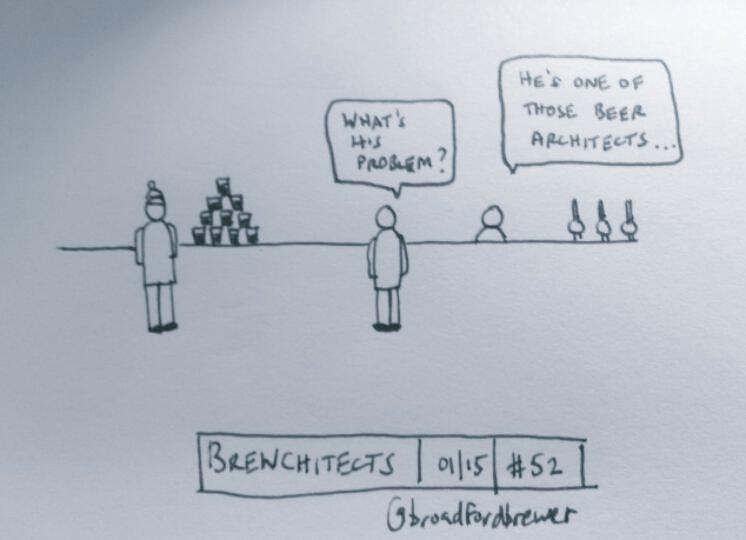
Its perhaps not surprising then that the changes taking place in the brewing industry causes some conflict amongst the more established brewers. Many of the newer entrants to the market do not have breweries of their own, they contract other brewing kits and often other brewers to brew for them. This flexibility allows for more experimentation but the accusation in some quarters is that this leads to a more rushed approach to brewing, with no concern for consistency of product and no real longevity. Jean Hummeler, owner of Moeder lambic is one such critic. He believes such ventures should not be referred to as brewers as he explained in a colourful tirade during a lively conference session on beer marketing: "I checked in the dictionary for the definition of brewery, the definition of brewer and nothing there describes what these "gypsy brewers" are doing. The only way Mikkeller is a brewer is when he gets home at night and brews a cup of tea for himself." This incendiary statement was more of a call for greater critical journalism within beer writing which I fully support (topic for another post) and he was at pains to point out that he enjoys a number of Mikkeller's beers but it does underline a common opinion amongst the established Belgian beer community.  (My opinion: "Gypsy brewers", "cuckoo brewers", "contract brewers", "beer architects"; who cares about the semantics or who does the physical brewing, if the beer is of good quality and tastes good it can only be a positive. Contract brewing brings benefits for both the contractor and contractee and there is space for this type of operation in the brewing world. )

Brewchitects (courtesy of TwattyBeerDoodles)
An De Ryck is of a similar opinion; "Unless you sleep in the brewery, live in the brewer, wake up and smell the mash in the morning you lose your link to the product, you're not a real brewer but a commercial company". Not everyone has the good fortune to be born in to a brewing family however and hiring someone else's kit is a great route to market for those whom the overheads would be prohibitively expensive otherwise. A number of brewers who begin by this route do go on to purchase their own breweries, with Struise being a well-known example.

"For us we work for the beer and not for the brand, we are not showmen...newer craft brewers are rarely original" An De Ryck

When asked by an audience member is imitation not the greatest form of flattery An replied; "yes its nice to know you've produced something that others want to copy, but the market is a fixed size and if we are copied and they take our market share because they can spend more time on marketing then we lose out". Its this remark that is most telling about more established brewers' feelings towards brewers sans breweries they are worried they will lose market share, they feel threatened and are perhaps jealous that with lower overheads, contract brewers can focus more on promoting their product and perhaps have a bigger reach than some of the more established brands.

The other reason for conservatism within the brewing community is perhaps due to the desire to maintain a handful of well-established brands rather than a slew of specials; with fewer beers they need to appeal to a wider group of drinkers to ensure a good chunk of the market can be served. The physical brewery is as important if not more so than the recipes and brewing team. This opinion has perhaps pervaded the Belgian consciousness to keep the actual number of breweries in Belgium to a fairly small number of 150, This perhaps leads to recipes remaining similar, though with the calibre of beers produced there is certainly something to be said for focussing on quality rather than quantity. 
In recent years this number has more than doubled with the addition of contract and rebadged brands and you can begin to see where some of the tension arises. 
Belgian brewers (and some beer drinkers) see what overseas brewers release as "Belgian" beers and despair because they fall a long way from the best native examples, often mono-dimensional due to a pervading "more is better" mentality. As Allain Delaet of Huyghe points out "hops are the spice of brewing they should be in balance with the rest of the brew, you want to be able to taste the meat as well as the spice"

However its not just imitation as It is amongst these contract brewers we see the most experimentation and whilst a number of brewers do look to the US and UK for inspiration, others are looking back in the history books to revive old recipes or create a confluence of traditional styles using modern techniques. This needs to happen to prevent stagnation and attract new drinkers to Belgian beers - the increase in the number of breweries can only be a good thing for consumers, increasing choice and rousing the more established brewers from their routine to compete for their share of the marketplace. Older established breweries are aware of their weaknesses, but are perhaps not focussing on the right areas; a much touted press conference with the Belgian Family Brewers during the main conference was a little lacklustre looking inwards and aiming to maintain the status quo, peppering their presentation with buzzwords about what they should be doing, with less focus on how they'd go about doing it. Chris Hall has summarised this well here. It remains to be seen whether there will be much change.

One thing the established breweries do have going for them is their expertise, years of experience bring with them the knowledge and ability to produce some wonderful beers. They are in a unique position to be able to share this knowledge with each other to develop in new and interesting ways and perhaps this is where they need to focus in the future, rather than griping about losing market share to newer players. Business journalist Ina Verstl has witnessed some change in attitudes over time however "20 years ago you could visit a brewery and never meet a member of brewing staff, they'd be hiding them in the cellars. Now they're wheeling out the brewmasters at every opportunity. The brewers have had to learn a new skill-set"

The family brewers are at pains to point out that they're not sitting on their laurels and all of the brewers were keen to present to us their more innovative products including Brettanomyces re-fermented ales (Wild Jo from De Koninck, Saison Surfine from Dubuission, Straffe Hendrik Wild from De Halve Maan ... more info here) the use of unusual ingredients (pink grapefruit in Pink Killer from Silly and basil in Lindemans' collaboration with Mikkeller). Not all of them work, but the willingness to try new things can only bode well for the country's brewing future. 

Centrifuge at "traditional" farmhouse brewery Dupont
More so than recipes it is new technologies where the real innovation is happening. Whilst some of it is for cost saving (which is important too, if breweries cannot make a profit they will not continue to exist) others are genuine improvements leading to more consistent and better tasting brews. Take Lindeman's use of stainless steel for lambic maturation for example. Foeders are prohibitively expensive, around ten times the price of the equivalent volume stainless vessel, limiting the rate of growth and given the current demand reducing the availability of the beer. Use of stainless steel with wood chips allows for increased capacity at a fraction of the cost and whilst a tasting of both revealed noticeable differences in flavour after a year, the increase in batches available for blending has led to improved consistency. This innovation and the beginnings of a spirit of collaboration amongst more established players alongside an explosion of newer entrants to the market can only bode well for the future of Belgian brewing and consumer choice but there is still a long way to go.

This post is based on observations prior to, during and after the  conference in Brussels last month  I received a number of beer samples on a subsidised trip around Belgian family breweries prior to the conference, plus of course many more during though I don't believe these influenced my opinions on the beers. Some were excellent and would happily part with my own money for them. Others were not so enjoyable (and a few downright disgusting!) Yes we were plied with beer with a hope that we would write about them (with a number of brewers following up by email post-conference) and whilst it might be argued that even mentioning the breweries in this post helps to raise the profile of the brewers, I'm not sure criticism of their opinions is what they had in mind.  The opinions reflected here are largely of the Belgian Family Brewers, who make up just a small proportion of the 150 breweries in Belgium, but due to their profile do have a more prominent voice than many others. Your mileage may vary, am happy to discuss. 

Up next: a focus on the brewing scene in Brussels as a microcosm of Belgian brewing as a whole.

12/09/2015

What do you mean by sour beer?

My trip to Belgium for #EBBC15 has driven home how eclectic the styles termed "sour" truly are. Aside from the fact that not all non-pure-Saccharomyces fermented beers really are sour, the sour/wild characteristics can be imparted by different methods.

These beers fall in to the following broad style groupings

1. Spontaneously fermented (lambic, gueuze etc), e.g. Cantillon
2. Fermented with cultured "wild" strains e.g. Alvinne Morpheus 
3.  Refermented with cultured "wild" strain, e.g. Orval
4.a)Mixed fermentation including bacteria and matured e.g. Rodenbach
b) Mixed fementation using lactobacillus and released young, e.g. Berlinner Kindl Weisse, Ritterguts Gose
5. Pre-soured in the kettle by lactobacillus/lactic acid
6. Refermented/matured in wood
7. Unintentional!

We were fortunate to be able to visit a number of breweries courtesy of both Visit Flanders & the Belgian Family Brewers, plus chat to a lot of the family brewers themselves. I'll use some of these examples to outline the differences, remember if the beers are unpasteurised they can continue to develop over time and can get worse as well as improve! This is not supposed to be an in depth how-to guide on these beers, nor do I want to go too deeply into the science as its pretty complex!  (There are a number of better qualified writers than I on these topics, Including Lars Marius Garshol, with recent posts on yeast and bacteria being particularly informative.)

1. The first "sour" that usually comes to mind are the Belgian lambics. These are brewed as a normal beer (except with the use of aged hops to reduce bitterness impact) then instead of being pitched with yeast are cooled overnight whilst exposed to native flora usually in a coolship with airflow controlled by vents. A number of breweries previously used coolships for cooling only but the lambic brewers specifically intend for wild yeasts and bacteria to inoculate the beer. A complex primary fermentation ensues, where different species including lactobacillus, Saccharomyces, pediococcus and Brettanomyces take the lead at different times. It is then matured in pre-used wooden casks that also contain a mixed culture and add further complexity to the beer. The beer may be released unblended (as jonge lambic <1yr and oude lambic >2yrs) or more often blended as a mixture of 1,2 & 3 year old lambics to produce gueuze. Lambic may also be aged on fruit to produce kriek (cherry), framboise/frambozen(raspberry) or other fruit lambics.

Coolship & open rafters at Cantillon
Recommended: Cantillon Lou Pepe Framboise, Boon Kriek Mariage Parfait, 3 Fonteinen Gueuze, Girardin Oude Lambiek

Sour ales maturing at Struise
2. Some brewers wish to produce beers with similar character to lambic beers but would like to be able to improve consistency/ repeatability of each batch. They may harvest or acquire a wild yeast(s)/ mixture with bacteria, then use this culture to ferment a beer. Often the cultures are not analysed, though in some cases they have been. They are capable of producing equally complex beers, though as they are not often matured/blended can taste quite different to spontaneously fermented beers.

Recommended: Alvinne Wild West, To Ol/ Mikkeller Ov-Ral

Orval mural at Bruges brewing museum
3. Similar to #2, these beers undergo a regular Saccharomyces fermentation then undergo a secondary refermentation either in bottle or conditioning tank. As with culturing wild yeast, these beers can gain complexity but in a more controlled way. That said, there is still variation in maturation "After three months people might say 'This beer is stinking' after 9 months however 'its fantastic'" of Hendrik Wild. 


Recommended: Orval, StraffeHendrik Wild, De Koninck Wild Jo

Forest of foeders at Rodenbach
4. a) Known as oud red/ oud bruin in Belgium, these beers obtain their sour character from a lactobacillus fermentation producing lactic acid. Rudi Ghequire at Rodenbach was a fount of knowledge about how their beer is produced. Undergoing initial fermentation it ends up at a pH around 5.5 whereupon it is aged in virgin (unused for other purposes) wood foeders for two years, reaching a pH of 3.2. The aged beer is then blended back with unaged beer to produce beers of different levels of sourness (regular rodenbach 3:1 new: old (pH 3.5) and grand cru 2:1 old:new (pH3.3)). Hops are not usually used as bitterness does not produce a good flavour profile with lactic acid; this can make the beers susceptible to acetobacter oxidation (producing acetic acid> vinegar) so care must be taken with the recipe design to scavenge (reduce) free oxygen and the beer is usually pasteurised prior to packaging. Like lambics, these beers can also be matured on fruit prior to packaging.

Recommended: Rodenbach foeder beer, Verhaeghe Duchesse de Bourgogne, Petrus Aged Pale, Rodenbach Caractere Rouge

b) Similar to the above beer styles are goses and berlinner weisses, though their pre-fermentation brewing process differs. Both include wheat in the mash, which is mashed at the higher acidity level conducive to the growth of lactobacillus in fermentation. The fermentation is often finished with other yeast strains and beer sare mor elikely to be drunk fersh rather than aged. Some details here.

5. Another method for producing lactic acid sourness without the need for lengthy ageing process is to sour the mash prior to boiling. This is also known as kettle souring. This is often employed by breweries without the space to mature beer and prevent the risk of contaminating equipment with organisms that could cause contamination of non-soured beers (the soured beer is boiled which kills the bacteria). Some breweries may also use food grade lactic acid, which is frowned upon by some as a cost saving measure (but then so is kettle souring).

Recommended: Galway Bay Heathen, Kernel London Sour

Bush de nuits slumbering
in Dubuisson's cellar
6. The final category is a bit of a catch all, which depending on the previous contents of the wood may or may not have sour character (and may or may not have been intended). The beer may have been fully fermented by one of the above methods prior to entering the barrel or undergo a refermentation in the barrel. Often the beer takes on the character of the wood/ barrels previous contents to a greater or lesser extent dependent upon the length of time in the wood. The use of wood for maturation is a complex topic; which I'll not go in to here.


7. Beers can also become sour unintentionally and sometimes unscrupulous brewers will release these on the market as intentional sour brews! Usually the result of an infection prior to leaving the brewery, they can also be picked up by poor pub hygiene or improper packaging. I'll not give examples here but sometimes unintentional souring can produce interesting results!


The diversity in the world of "sour" beers is only just beginning to be (re)explored by British brewers, with the majority of those released to date being of types 5+6. As brewers begin to invest in separate brew-plants to keep potential contaminants separate from their core ranges we will see more sour and wild beers produced in the UK. Already Elgoods have released a range of lambics inoculated using their old rooftop coolship and Wild beer co have produced Somerset Wild, inoculated in the orchards of Somerset. These beers can have a true sense of place, being tied intimately to their environment by their fermentation flora. Burning Sky and Brodies have produced sour red/brown ales and Fullers occasionally continue to produce the wood-matured Gales Prize Old Ale. Recently Redchurch have begun experimenting and Brewdog hope to invest in separate kit after this round of share-selling to boost their wild credentials. Unlike Nate, I think there is still a long way to go and I'd like to see sour beers more widely available out of the craft beer "geek" bars...of course there should always be a variety available, it is possible to have too much of a good thing!  I look forward to seeing how these breweries and others develop in the coming years. 

Northern Ireland is hosting what (I think) is the first of probably many sour beer competitions in the UK: Sourfest is on Saturday 26th September at Boundary Brewing in Belfast. I will be amongst the judges assessing both commercial and home brew efforts.

Left handed giant in Bristol will be launching their taproom next Sundayat the start of Bristol beer week with a sour beer festival; which has some great beers available, including some one offs; so do head along and check it out.

Do you know of any other UK breweries producing sour/ wild beers? Let me know in the comments below.

The idea for this post was driven by De Brabandere's very good presentation on how they make their Petrus range. Many free samples were provided during the beer bloggers conference, but I also bought plenty of beers.There may be some errors; so please feel free to correct me!

27/08/2015

80 Brussels Boozers (and what to drink)

My title doesn't have quite the same ring to it as that chosen for the book that this post is about. The 80 beer series has returned to where it began with the release of the second eidition of around Brussels in 80 beers. I caught up with author Joe Stange to find out what he's been getting up to:

BIK: How did you get involved with 80 beers?

JS: I was living in Brussels and writing a book on the best places to drink the best beer in Brussels. Then I heard that Tim Webb wanted to publish one akin to Podge and Siobhan's Around Bruges in 80 Beers. And I thought, "Oh, shit. I'd rather not compete with that." So I called Tim. I explained that I was a journalist who was already working on such a book, and might he need someone to write it? So he put me together with Yvan De Baets, and we co-researched and wrote the first edition. My background was news reporting, plus two years of living in Brussels and filling a notebook with beer and pub notes.

BIK: How did you find the time to check out so many pubs & bars? I assume there must have been plenty that didn't make the cut too!

JS: At this point many years of research have gone into it. I have a working list of nearly 200 cafés, but there are many hundreds more in Brussels. I can't get to them all. I lived in Brussels for four years until 2010, and I've managed to get back two or three times per year since then. Most of that time I spend just walking and tramming around the city, following leads and occasionally finding something new. I follow local Brussels media too, because they occasionally write about new cafés or restaurants. Still, I'm sure there are a few good ones out there that I haven't found. If so, let me know!

BIK: Are you impressed with how much the bar scene in Brussels has moved on in the last 6 years?

JS: Yes and no. There are more bars, cafés and shops run by people who are selective about Belgian beer and know what they're doing. So that's great. It was harder to narrow my list down than it was in 2009 for the first edition.

On the other hand there are also an absurd number of ridiculous trendy "concept" bars that either don't care about beer or are content to relay mainly on the products of one large beer company. Meanwhile Brussels hotel bars are stuck in the 1980s.

Also, Belgian bars are starting to play with international craft beer, which is fine, but unfortunately they come at international craft prices. As in other well established beer countries, the Belgians generally refuse to pay much for beer. I'm cheap and old-fashioned so I like it that way.

The Corbeau (Raven)

BIK: What are your thoughts on how Belgian beer as a whole, moving to more modern interpretations of styles whilst some breweries still preserving traditional styles

JS: Our cultural borders were always liminal, never hard and fast. What we once learned were "Belgian" beers were also heavily influenced by British ale, German lager and French wine -- and influence has many vectors. But Belgian beer does have a certain identity and common characteristics -- light body, sturdy foam, lively carbonation, expressive yeast, bottle conditioned -- and I get annoyed when lazy brewers chuck all that away in a doomed attempt to imitate a California IPA, for example. 

BIK: A topic i think will come up in conference: brewers without breweries (commissioners, gypsy or otherwise). What are your views on these type of breweries and are they overall a good, bad or indifferent thing for Belgium?

JS: The chief problem is not hiring a brewery -- it can be a sensible arrangement -- but lack of honesty. People want to know where their food and drink is made. The label should tell them the place of manufacture. Also I have little patience for misuse of the words "brewer" and "brewery." I want to protect the language there. A brewer is someone who physically brews beer. A brewery is a building that houses functioning brewing equipment. If you are not those things, do not use those words. There is no shame in being an excellent marketeer or successful entrepreneur who is sensible enough to hire skilled technicians to make a product. Own it, instead of pretending to be something you're not. It's disrespectful to the people who do the production work.

BIK If you had time for just a single place in Brussels, which would it be?

JS: The Brocante, on Place du Jeu de Balle. Great list of lambics, lots of odd local snacks, interesting bric-a-brac, and a cat or two.

BIK: If there was one bar you'd suggest people visit to get an authentic taste of Brussels history and beer, which would it be?

JS: Lots of choices here but I'd single out the Bon Vieux Temps. Dark, ancient and unchanging, a wonderful place to sip a Trappist and talk quietly or admire furnishings.

BIK: If pressed for your favourite Belgian beer, what would you name?


JS: Saison Dupont.


A man of good taste obviously, recommending one of my favourite Belgian beers! Joe kindly arranged to get the book posted to me in time for our trip to Brussels to give it a proper road test. Its certainly had that and now appears a few years old, replete with beer stains and foxed cover! We've been to around ten of the eighty outlets so far and found something great to drink at all of them. Joe's writing style is both conversational and observational with plenty of details on the history of the place, some great photos and each page is rounded out with a beer suggestion and some pithy tasting notes.

I started out trying to drink the suggested beer in each venue, but as with all transient things a number of the venues no longer stock the suggested beer. No worries though as there are plenty of other belgian beers to choose from!

I'll probably do a full round up of all the places that we get to over the weekend, but in the meantime I'd recommend Neutnigenuf for great beer cuisine, moder lambic fontinas for beer choice and le Fleur en Papier doree for atmosphere. Don't forget cantillon and de la senne of course!

Barrel store at Cantillon


The book is very reasonably priced at £10.99 and can be brought on line from www.booksaboutbeer.com, on Amazon or in many branches of Waterstones/ other reputable bookstores. For those attending the conference there's a Waterstones opposite the Hotel Marivaux and Bier Tempel also holds copies. If you're around next weekend (4th-6th September) then Joe and publisher Tim are around for Brussels beer weekend and launching their book at Delices & Caprices on Saturday at 1pm.

Happy bar hunting!

Cheers to Joe for taking the time to answer my questions, if anyone wants to catch up with him, share suggestions, jokes or pictures drop him a line at BXL80beers AT gmail DOT com or on Facebook here.

*I always thought the name was "Strange" to the extent I was about to report a typo on the front cover...

23/04/2015

Around Belgium in 50 beers

Its already late April and I haven't yet posted about this year's annual beer blogging event, renamed this year to better reflect the participants as "The Beer Bloggers and Writers Conference". Slots are filling up nicely but there's still time to register to join us on August Bank holiday weekend. This years conference will be in Belgium (if you hadn't guessed from the title), more specifically Brussels and the organisers seem to have gone all out in organising an agenda befitting of an event in its fifth year.

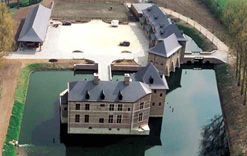
Diepensteyn Castle, now owned by Palm
For the first time in the European conference history there will be an optional pre-conference excursion taking in three breweries (and a castle!) including première Saison proponents Dupont, fruit and lambic beer purveyors Lindemans and the oldest brewery in Wallonia Dubuissons. All this and meals plus transport for only 20Euro (so about fifteen quid for us Brits!)

The above excursion and conference proper this year are sponsored by Belgian Family Brewers so expect to sample beers from brewers Bosteels through Verhaege via De Konninck and St Bernard, there will be a veritable smorgasbord of beers to choose from.  There's also a tantalising hint of a big announcement with a press conference to be hosted on day two discussing a new direction for the family brewers. Could this be a move to protect more traditional styles from overseas interference as with Gueuzes or could it perhaps be railing against contract brewers and providers thereof? We'll have to wait and see but it will certainly be interesting.

Interior at BelgaQueen
I'm really looking forward to the talk on sour beers by Petrus and the history of Belgian brewing - how does it tie in with our perception in the UK? There are also the usual conference events including obligatory wordpress session, tales from the shires as we get a round-up of the state of blogging around the Globe and the ever-popular brewery speed-dating. We're spoiled for food this year too as alongside the usual Pilsner Urquel Feast we have an evening meal in Belga Queen which looks like it could be a highlight as well as lunch provided on both days, all for the measly sum of 120Euro!

The grand entrance hall to marivaux
The conference venue looks fantastic in the converted cinema that is Hotel Marivaux and there's an exceptional conference rate of 95Euro for a double room (helped by the fact Brussels is quieter in the summer). To get to Brussels you can fly directly or via Amsterdam or Paris. There's also the more relaxed method of Eurostar, which may be a better bet if you're planning on bringing bottles back!

Foeders at Rodenbach
The fun doesn't end there though as there are three* post-conference excursionsorganised by Visit Flanders. There's a one-day trip for wild ale fans around the Pajottenland including to my first Gueuzerie visit Boon as well as the lambic museum and beer festival. The second option is a trip to Leuven (now extended to two days) with visits to small microbreweries like De Triest and global behemoths like Stella Artois. The third option (which myself and Daisy are choosing) takes in the hop fields of Poperinge, six breweries over two days including crazy experimenteers de struisse, Saint Sixtus Trappist Abbey (producers of long-time World Number One Beer on Ratebeer (currently #2!) Westvleteren XII) and Flemish Red experts Rodenbach plus a  day pottering about Bruges including the Beer Museum. Crazily all of these trips are also 20Euro per person including overnight stays!
choice of not one, not two but

I can definitely recommend attending, all in for five days pretty much full board and transport once you get to Brussels with basically unlimited beer  you're looking at about £300 per person . Can't really beat that anywhere in the UK, let alone in one of the most expensive cities in the world so what are you waiting for? Hope to see you there!

*Though you've missed out on one of the two day-excursions already

05/09/2014

#session91 Diving into Belgophilia

 I'm sat at East Midlands airport with very little to do; so it's high time I give myself a kick up the arse and start blogging again. There's no better place to start than with the current session topic, hosted this month by Breandán at Belgian Smaak. He asks us to talk about our first Belgian beer. I unfortunately have no recollection of which it was, sampled in my hazy student days almost 9 years ago. It is guaranteed to have been something good however as it was sourced from the ever excellent bitter virtue in Southampton. It was probably Chris, perhaps Ann who led me around the groaning shelves tempting me to part with my student loan in exchange for beery libations to sup at the local punk house whilst watching awesome acoustic bands and sometimes full blown drum laden metal bands with beach dinghy crowd surfing...

Anyway I digress, the point is it could have been any number of excellent beers for which Belgium is rightly famed (though I have a sneaky suspicion it was the fruity balsamic punchy duchesse de Bourgogne). Instead I'll have to dredge through the ancient (3years old) rate beer reviews to settle on my first rated Belgian... De Struisse Pannepot. Not a bad first rate eh?!

Pannepot is a 10% Belgian strong ale which cunningly hides its strength away until you stand up at which point you promptly fall over. I may have made that last part up but it sure wears its strength well. Even in my early rating days I appreciated this scoring the beer a massive 4.5, sitting comfortably in the top 1% of my beers to date.


Here's what I thought:
A richly dark reddish brown beer which pours with a thin head that disappears almost immediately. Molasses and orange peel on the nose. First taste gives a lot of sweetness and some umami with a heavy alcohol presence and quite an abrupt finish, neither malty nor hoppy. Not unlike a bourbon in that it hints at vanilla. Very easy to drink which belies its 10%ABV. (2009 vintage 33cl)
That beer was 2 years old, I've since tried other vintages but 2 years has yet to be surpassed or perhaps 2009 was just an excellent year...more rigorous research is required.

 Struisse certainly make some excellent beers with the black Albert beers being particular stand outs,though for me pannepot is the pinnacle of a distinguished line up and should be on your beer bucket list to be dispatched in short shrift.

Breandán has been speedy with the write up, you can find it here, cheers for hosting! Next month's Session is being hosted by Jeremy short and is all about home brewing...find the topic here.

15/07/2013

More facial hair

As promised, here are my thoughts on some more Weird Beard Brews following a post earlier this month. Four saisons and an IPA.


 photo P1010012-1.jpg
Saison 14 gives everything I look for in a saison, Belgian nose of honeyed yeast esters, big wheaty spicy body and a little funkiness in the finish. It made an excellent dry pre-dinner aperitif and one i will be visiting again. On a par with their Black Perle and fighting for top place with Fade to Black.

 photo P1010015-1.jpgThe same can't be said of Saison 42 (a hitchiker's guide to the galaxy reference and a collaboration with new Swedish micro Sad Robot) which is rather flat and tasteless. It finishes fairly sweet and heavy too, maybe it has a lower proportion of wheat in it?

 photo P1010014-1.jpgIts quirkier brother 42e is more like it, primed with elderflower cordial in the bottle it has a wild feel to it. There's some heavy candy sugar towards the end but it sings with a floral elderflower refrain that demands another glug.

Collaboration is the name of the game as the next saison is also a colabeeration with Andy (@tabamatu) or more rightly a scale up of one of his many successful home brews. Cheers Andy for lugging this up to Edinburgh for me! A great showcase for the gooseberry side of the Nelson sauvin hop, though perhaps a little too high in alcohol for my liking. Well made and pretty well balanced, seek it out if Nelson Saison your thing!


 photo P1010006-1.jpgFinally Hit the Lights is the IPA Miss the Lights was planned to be. I certainly preferred it to the earlier iteration. Well balanced with red berries and sage/ lemon balm in the aroma. It drinks well, with more of those red berries, though is a little to hefty to make it sessionable.

Weird Beard has two other brews that I've not yet had the chance to try and narrowly missed out on trying at EBBC13 this weekend! Ah well, you can't try it all. More on EC13 later this week (when I have my notes and thoughts in order!) 

01/08/2012

CABPOM August: 3 Fonteinen Kriek & Le Chevrot

Logo kindly designed by Simon
of CAMRGB
Something a bit different this month. Fruit beer and white cheese work well together but add some goatiness to the mix and it becomes something special.

3 Fonteinen is one of the revered Belgian lambic brewers but they also make kriek. This one is just a bit special as it uses wild forraged schaerbeekse cherries, adding a different flavour than you'd normally expect froma  kriek. Schaerbeekse cherries used to be cultivated specifically for use in brewing, but with the fall in popularity of lambic the orchards fell derelict. 3 Fonteinen tracked down some of these wild orchards and turned the harvested fruit into a traditional kriek. This particular beer is a 35% blend of schaerbeekse and the remainder regular morello cherries. I picked it up at Brewdog Edinburgh in a 750ml bottle.

Here are my notes: Pours pale scarlet with slight fluffy head. Sweet cherry, raspberry, acrid hay, lemon, malt, barnyard. Dry tart cherry, lots of stone character (think almonds and bakewell tart), very sharp lactic, long cherry stone finish.

The cheese is one I picked up from Tesco (they have a much better range in Scotland than here!) not knowing much. Its called Le Chevrot and is quite similar to Crottin apparently. To me its dry and chalky, with a goaty richness and perhaps the tiniest hint of lemon.  A bit dull perhaps.


Works nicely with poppy-seed crackers
When paired with the beer however it comes alive with creaminess and accentuated by the funk to transport you to the dairy at milking time. That light lemon note plays well with the tart cherries and the beers carbonation is more than a match for the slightly clacky texture. I'd like to try this cheese aged as it should be even better.

18/07/2012

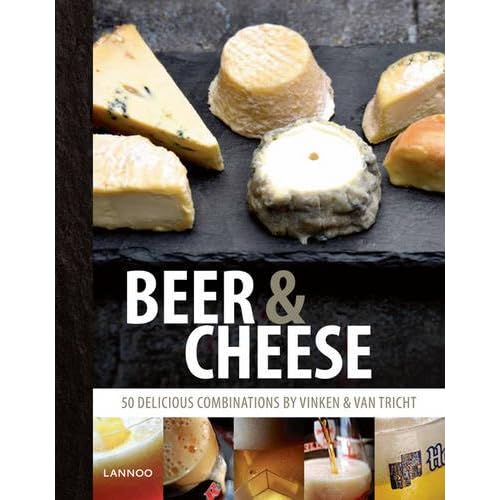
Book Review: Beer & Cheese

As some of you may be aware by now, I'm writing an E-book of cheese and beer pairings. When I had the idea I Googled cheese & beer pairings and found a book had recently been published in Belgium on that very subject. The catch? Its in Dutch! Well its evidently done well enough in the author's native tongue to be translated into English and its to be published on July 25th. (Available on Amazon here)

The authors certainly have the right credentials on paper, one a brewing industry professional/ sommelier of many years standing, the other a cheese affineur of almost 35 years experience. The book looks the business, harback with succulent cheeses arranged on slate.

Inside it's even better, with thick paper, decent quality photos and a two page spread for each suggested pairing. It purports to cover "all the major styles" and whilst it features 50 different beers, a number of styles are repeated whilst other more modern or obsure styles seem to have been omitted. It also seems to rely heavily on the more commercially available beers (unsurprising given Vinken's connections) but does feature six of the seven Trappist breweries (what, no Westvletern?). Comprehensive tasting notes though and a few beers I've not yet come across I shall now be seeking out.

The pictures of the cheese cause much salivation and there's plenty of info on the cheeses but actually little by way of tasting notes on the cheese or the pairing, relying more on writing up the "experience" of the pairing. I'd have liked to know a bit more about the cheeses as there were a number I'd not heard of, let alone tasted.This is reinforced by photos of the authors scattered throughout tucking in to cheese and beer. Its less of a guide and more of a report on a few enjoyable afternoons.

One thing I did enjoy was reference to brewery and cheesemaker visits, which were the subject of a series of 15 minute programs on a Belgian food and drinks channel. There are also suggestions of alternative cheeses, which is handy as I suspect a number of them may not even be available in the UK. Unlike the beers, there are a smattering of cheeses from outside Belgium and France used as pairings, but the omission of a decent cheddar is surely a grave omission!

My biggest bugbear with the back is perhaps the lack of indexes. I'd like to see an index by cheese and by beer at the very least. A decent glossary would also make the guide more accessible to the casual reader. There is a contents page but the pairings are in no discernible order.

I'd recommend the book to anyone interested in cheese and/or  Belgian beer and it certainly looks the price. Perhaps a little highly priced, but I've seen Lulu prices would be similar if I were to go down the printed route. If successful it could potentially come out in paperback in the future. Nevertheless this is a great coffee table tome and one which I will enjoy dipping into on occasion. As for the greatness of the pairings I've not yet had a chance to test them, but there's plenty I'm keen to try!

I requested a review copy of the book from, Lannoo, publishers of the book. 
"Beer & Cheese" by Vinken & Van Tricht. Lanoo (Tielt) 2012. ISBN 978-9-401401-73-9  RRP: £28.50

02/07/2012

CABPOM July: Roquefort and Rochefort 10

Well, gorgonzola, actually, but I liked the wordplay.


Trappistes Rochefort 10 is one of those beers I've had before and will certainly have again. Its been about three years since my last bottle; so this is long overdue. Its the strongest of three produced at L'abbaye Notre-Dame de Saint-Remy in Rochefort. Held in high regard (and rightly so) its fairly widely distributed in the UK; do go get yourself some if you've not had it!

Resplendent in its chalice
It pours dark chestnut with a luscious, mocha foam. Fantastically complex nose, plums, stewed apples, molasses, toffee and vanilla. Mouth coating, sweet crystal malt at first, followed by a big boozy note, touch of buttered popcorn, increased vinous fruit towards the end, a touch of noble hop and more vanilla.

It slips down far too easily.

Gorgonzola is an Italian semi-soft salty blue cheese, often using the same peniciliium roqueforti bacteria for its blue streak as the eponymous French cheese. Its salty and sharp and an acquired taste. Certainly I had to first overcome my dislike for Stilton before Gorgonzola and Roquefort even got a look in. Looking back I can't even see what my issue with it was!

Gorgonzola (left) and Mature Cheddar
At first it jars slightly with the hops and looks to be a duff pairing, but try a second mouthful and its transformed. Suddenly there's a lot of sweetness and fruit in the cheese which just serves to accentuate all those vinous flavours in the beer. The salt here has a part to play too, seemingly accentuating the alcohol in the beer in a complementary way, lifting it to sherry territory. Pears and other orchard fruits also dance on the tongue as the cheese is washed away. Not so much evidence of that umami of blue cheese and dark beer here, those fruity flavours being the strongest players. Nevertheless, superb beer, great match.

The beer also works well with mature cheddar, the older the better and of course if you can get hold of something unpasteurised like Keen's you're on to a winner.

11/05/2012

Classic Vintage

Last month I reviewed the larger Goose Island vintage bottles and this month I'm back again with the four smaller brethren to the sistren*. These are a more disparate group of beers with a dark and light saison, a Belgian Abbey style and a pale ale.
Goose Island's Vintage Collection

Goose Island thinks they pair well with cheese; so I'll take them up on the challenge. Everyone knows I'm a cheese fiend so don't need an excuse really!  I headed to M&S and picked up a couple of Irish cheeses and a French brie.


Sofie is a Belgian-style saison that works well with brie. Brewed with orange peel and aged in white wine barrels with wild yeast its supposed to be a substitute for champagne. It pours hazy pale blonde with a fluffy white foam. On the nose its quite lactic with acidic pineapple and a touch of Brett. Its a light touch in the mouth, reminding me of the hibiscus flavours from Goose Island Fleur with a touch of white pepper in the finish. Sparkling carbonation as fine as champagne.
The brie is pungent, with mushroomy rind, uniform, slightly squishy paste but the right side of ammoniac-al. The flavour is delicate and not so pungent as an unpasteurised brie but works well enough. When sampled together the two cancel each other out somewhat, but the earthy mushroom rind is enhanced by the spicy note and of course that carbonation does its thing in cleansing the palate. An alright but not outstanding match.

Matilda is a Belgian style pale ale, suggested to go with washed rind cheeses and Camembert. It pours mid-amber with sweet peach and perfumed violet nose. Sweet candy sugar with a slight burnt caramel in the finish. Little in the way of carbonation.
I chose aardharan for this, a grainy, salty rind with soft and tacky paste, very buttery with strong rind. This time the beer acquires some fruity and peppery spice notes with the cheese.

Pere Jacques is a Belgian abbey-style dubbel which pairs to aged Gouda or Stilton. It pours mid-ruby brown with a strong nose of apple orchards, so much so that with your eyes closed it could be a cider. Its quite sweet with plenty of higher alcohols and a burnt sugar/ solvent finish. I'm not too keen.
Chose to pair it with cashel blue, another Irish cheese. Its salty and funky with a rich creamy finish. The cheese is perhaps a little strong for the beer, the beer losing what little character it did have and leaving a residual sweetness. The full flavour of the cheese is still apparent

Last but not least is Pepe Nero, the black saison. No cheese suggestion here, but I'd go for a crumbly Lancashire or Cheshire. Pours dark brown with fizzy tan head that doesn't hang around. On the nose its black pepper spice and toffee malt. Sweet up front with chocolate malt and a hint of vegetal horseradish. A long sweet and spicy finish.


With the exception of Sofie I'm not sure that these beers better any of the Belgian greats and the cheese pairing suggestions aren't particularly good, with the exception of washed rind & Matilda. So CABPOM for may would be Ardharan and Goose Island Matilda, another win for the washed rind cheeses. I'd suggest they're all still worth trying, but probably not at the expense of the Belgian brewed classics.

*yes I'm aware that's not a word in much use these days but its real - look it up!